Callaway Sprinkle

Photography / collection

Corona (León, 2026)

For one hundred and eight seconds, the world went quiet save for the music of the spheres.

Or oblate spheroids, if you must.

The Sun winked, one brilliant prominence arcing out, a stray lock of plasmoid hair; the horizon was burnt copper in every direction; the air was cool and soft.
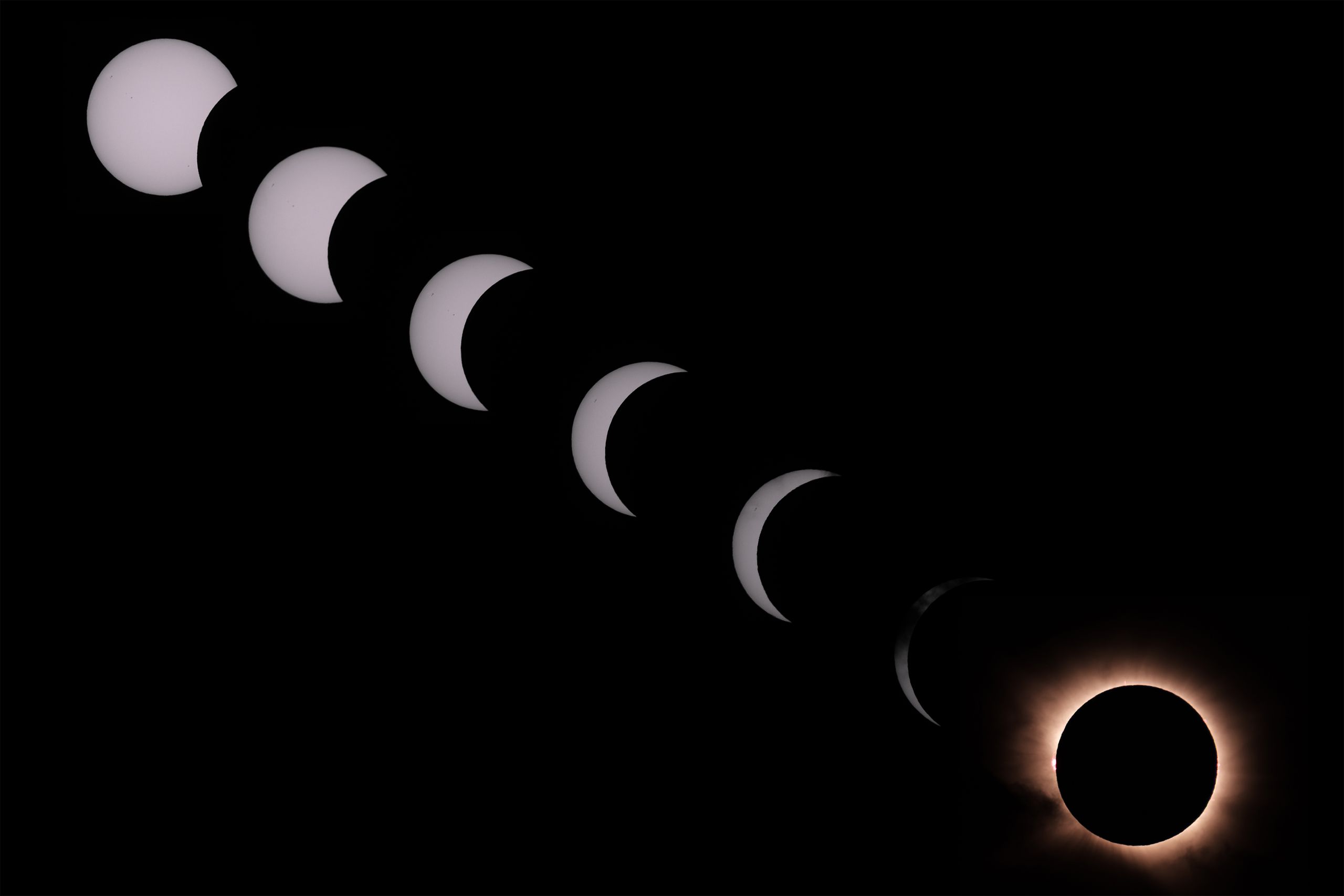
A series of seven pictures of the eclipse from top left to bottom right. The beginning shows the Sun about 15% hidden behind the Moon, and the end is totality. The sequence shows the crescent progressively waning to a sliver before the corona becomes visible.
A 43-minute composite of the eclipse, ending in totality with corona and solar prominences.

In 2024, clouds made for a sullen day in the Texas hill country as the same drama was acted out somewhere overhead. We checked the forecasts, marking in red the next opportunity in August 2026. How convenient that totality crossed one of my favourite places in the world, the northern Spanish region of Asturias!
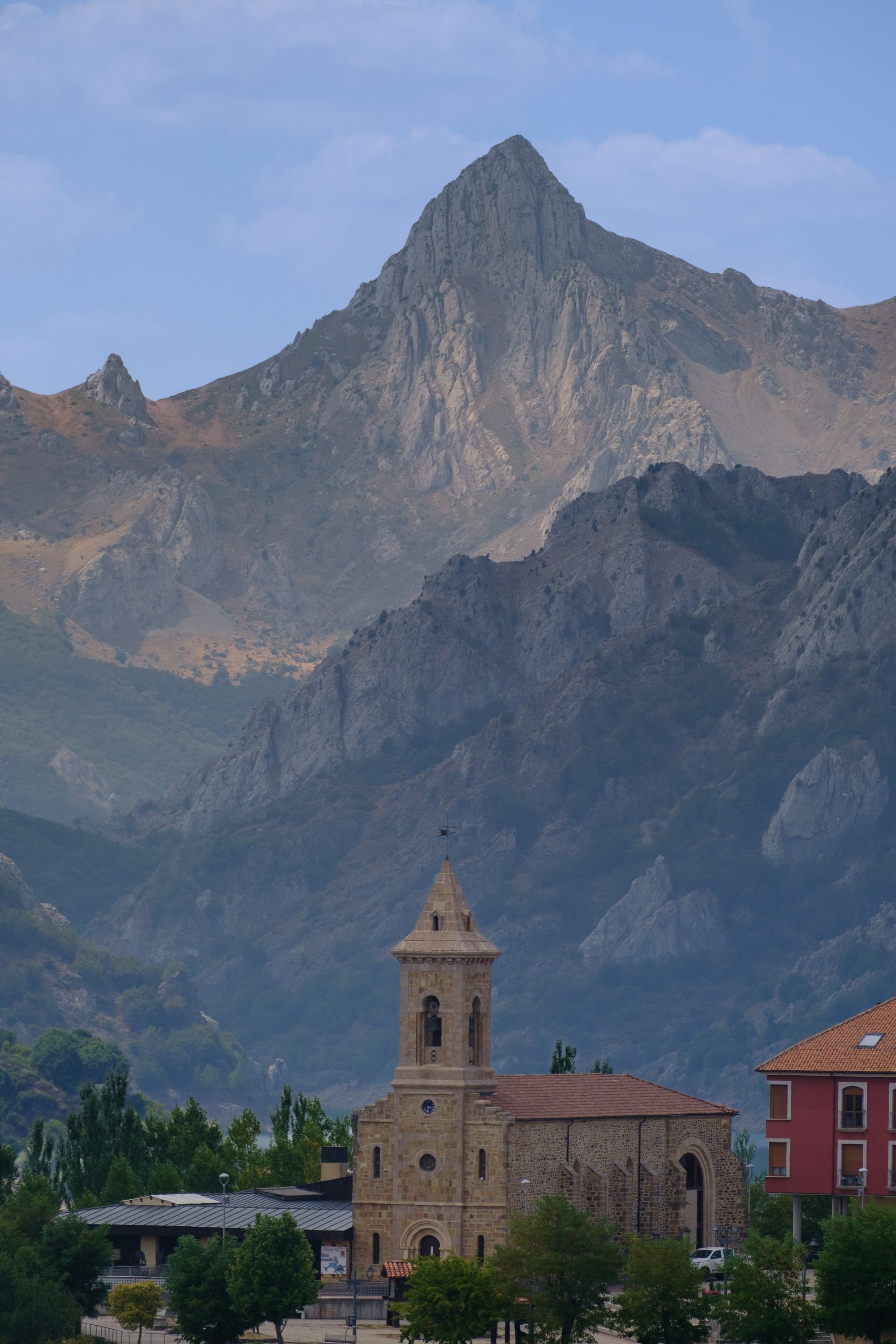
The town of Riaño's stone village church sits in front of steep, spiky limestone peaks.
The town of Riaño sits between arms of its reservoir, limestone peaks behind.
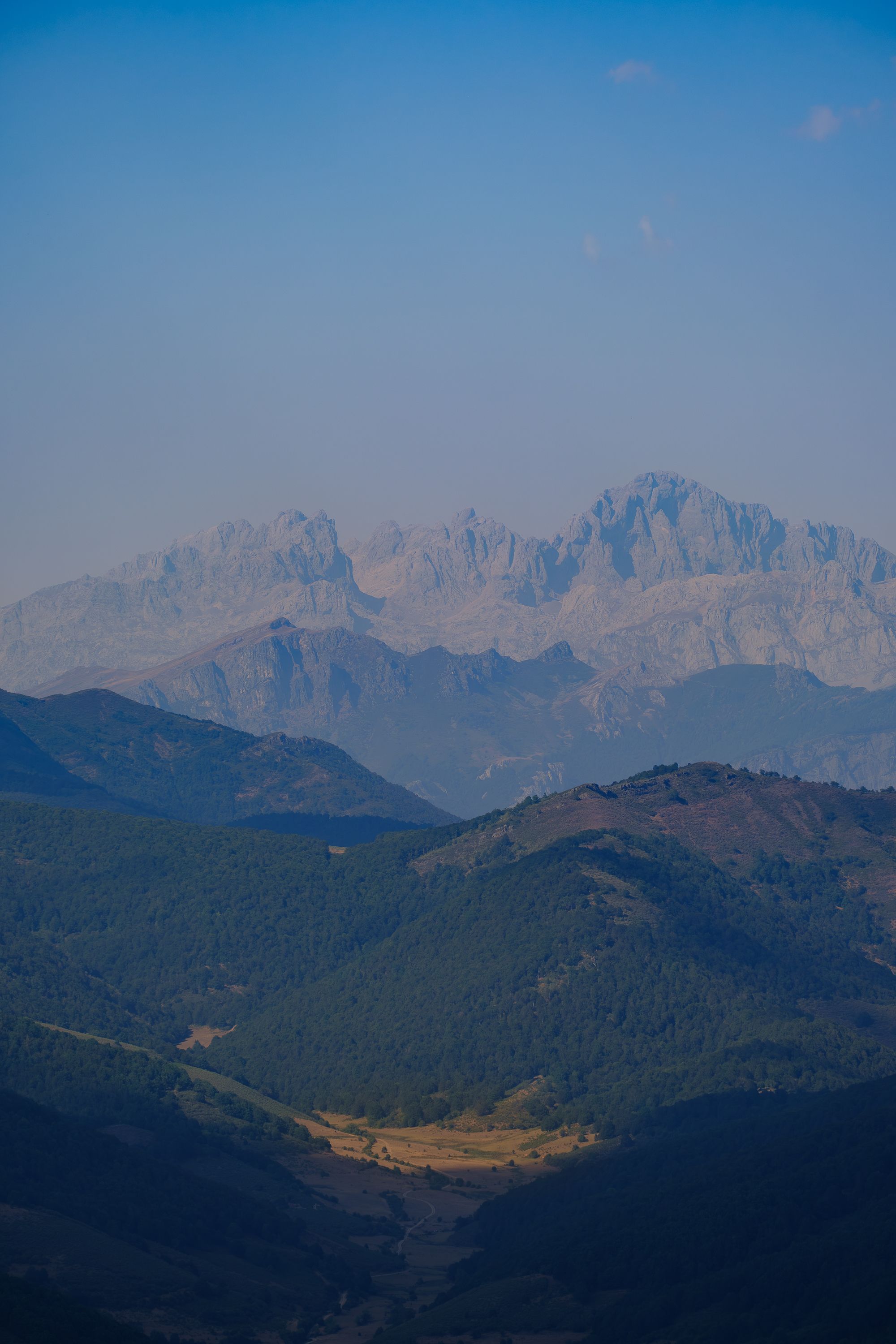
The Picos de Europa to the north, all bare limestone, rise from the summer haze above nearer, forest-covered ridges and hills. A single sunlit field in the foreground is bright gold.
A view northwards towards the Picos de Europa proper.

Yes, Asturias, renowned for cider, Celtic music, cave painting, caliza, and… clouds.

Seeking to avoid the disappointment that dogged us in Texas, we ventured south to León, trusting the rain-shadow of the Picos. Pico Yordas, which looms over the Riaño reservoir, became our destination to beat the crowds. (Besides, there was no way I’d watch this from anywhere save atop a mountain.)
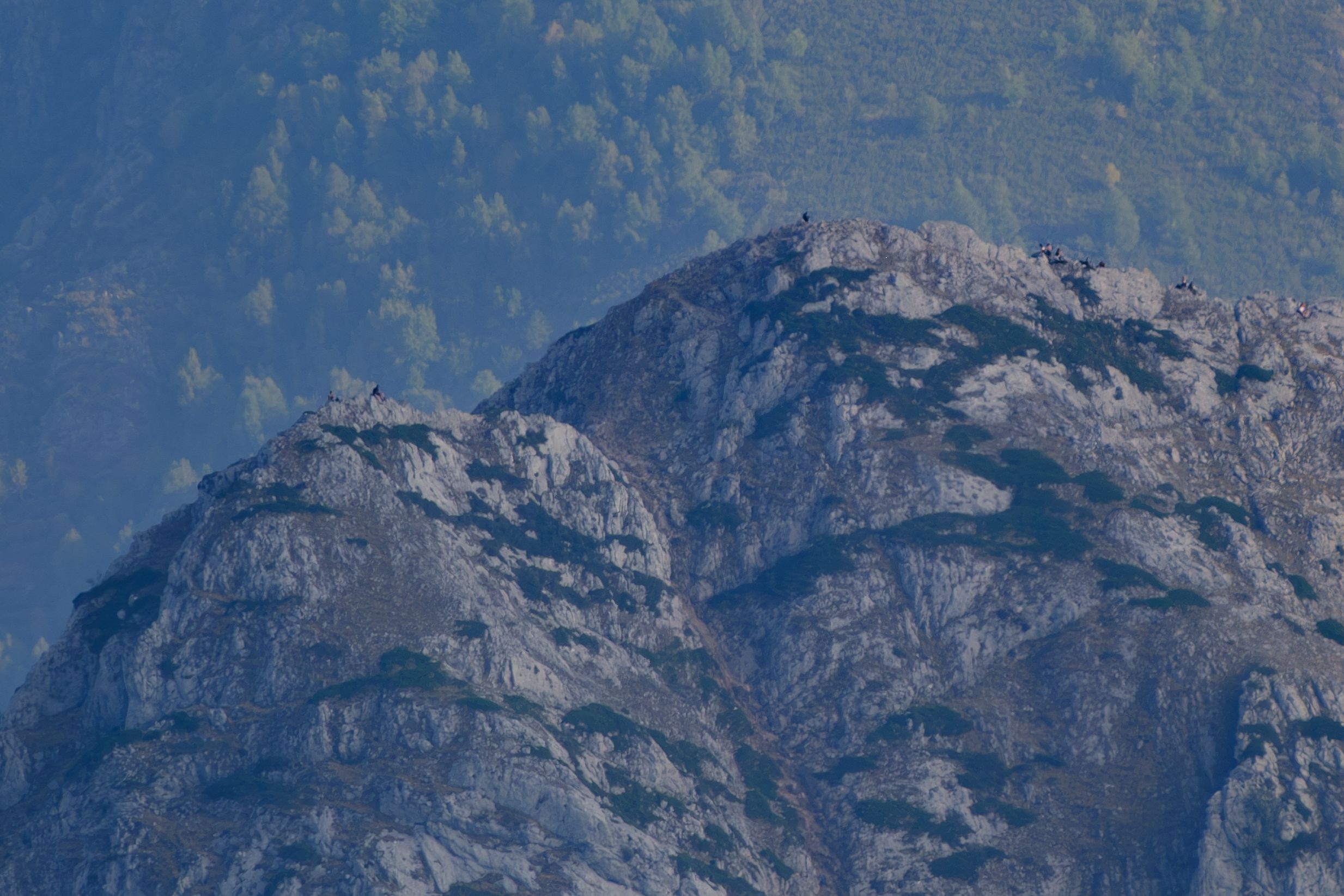
The summit of neighbouring Pico Gilbo hosts around a dozen other hikers clad in bright synthetic clothing.
Other eclipse-viewers line the ridge atop neighbouring Pico Gilbo.

The trail up bled from oak forest to juniper-studded meadow to talus field and limestone outcrop, leading at last to a local high point and vast sweeps of surrounding landscape.
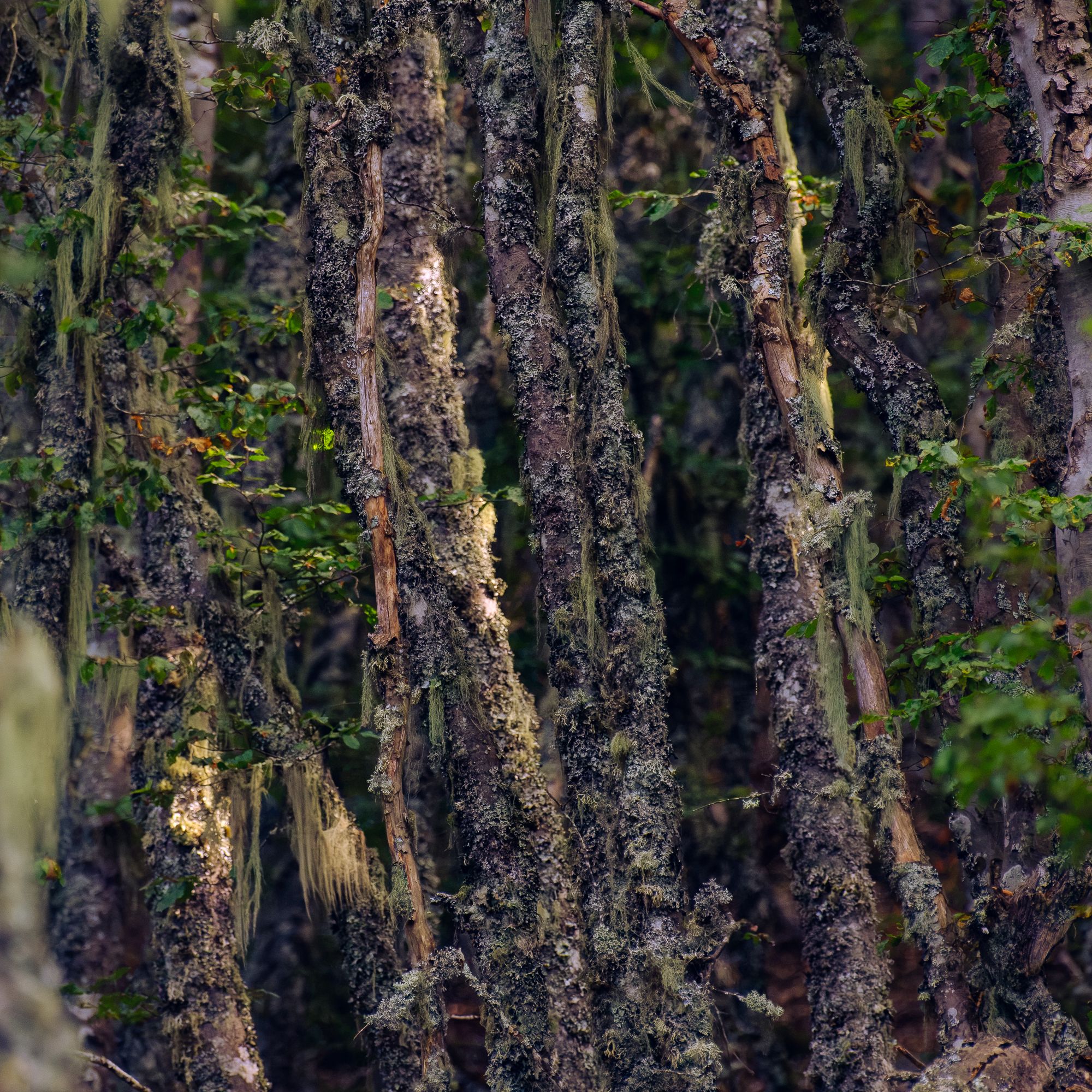
Lichens almost completely cover a cluster of vertical trunks in the oak forest, making an abstract canvas for sunlight.
Light dapples lichen and moss in the forest.
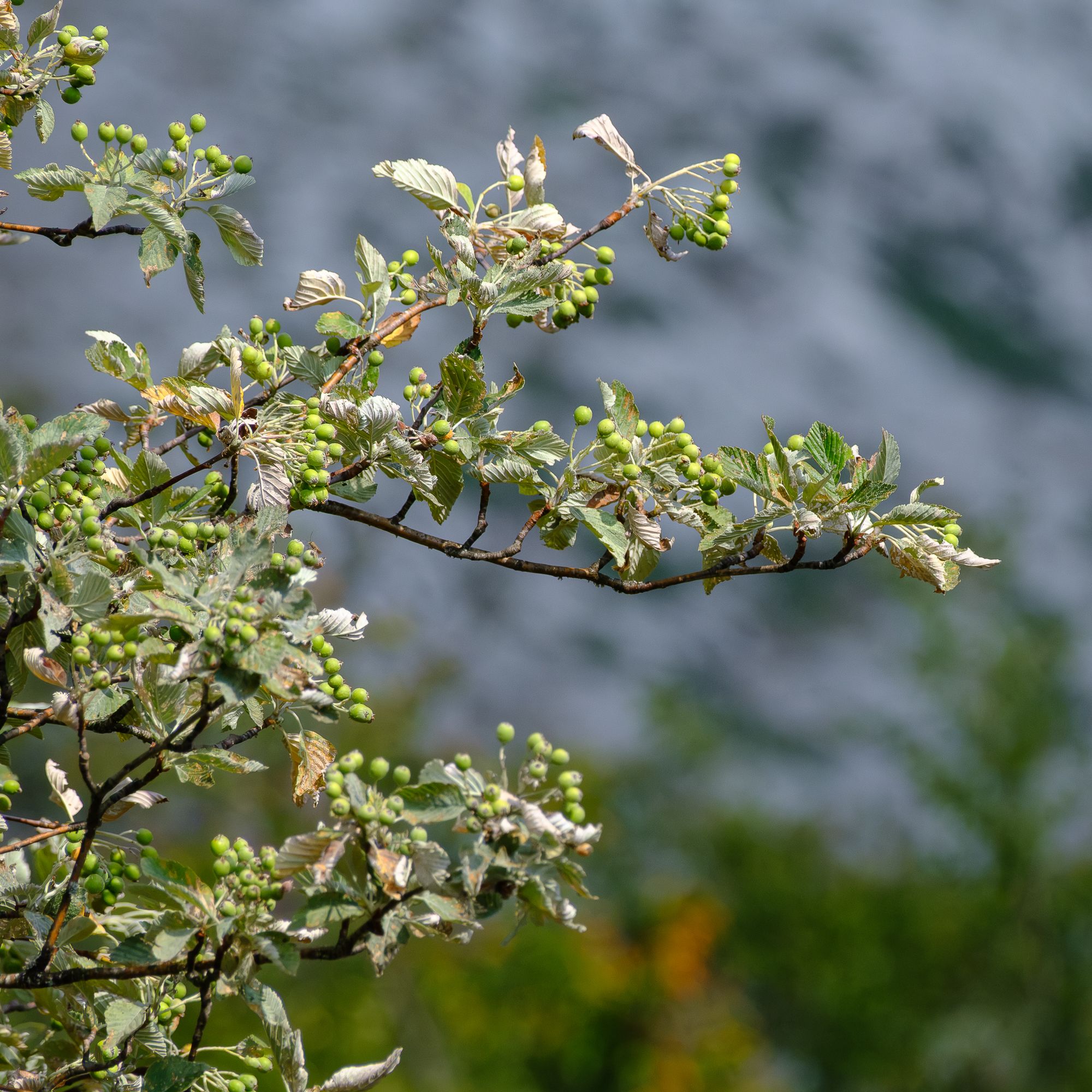
A close-up of a branch of a whitebeam tree, showing papery, lined leaves and pistachio-green berries.
A whitebeam guards the edge of the treeline.
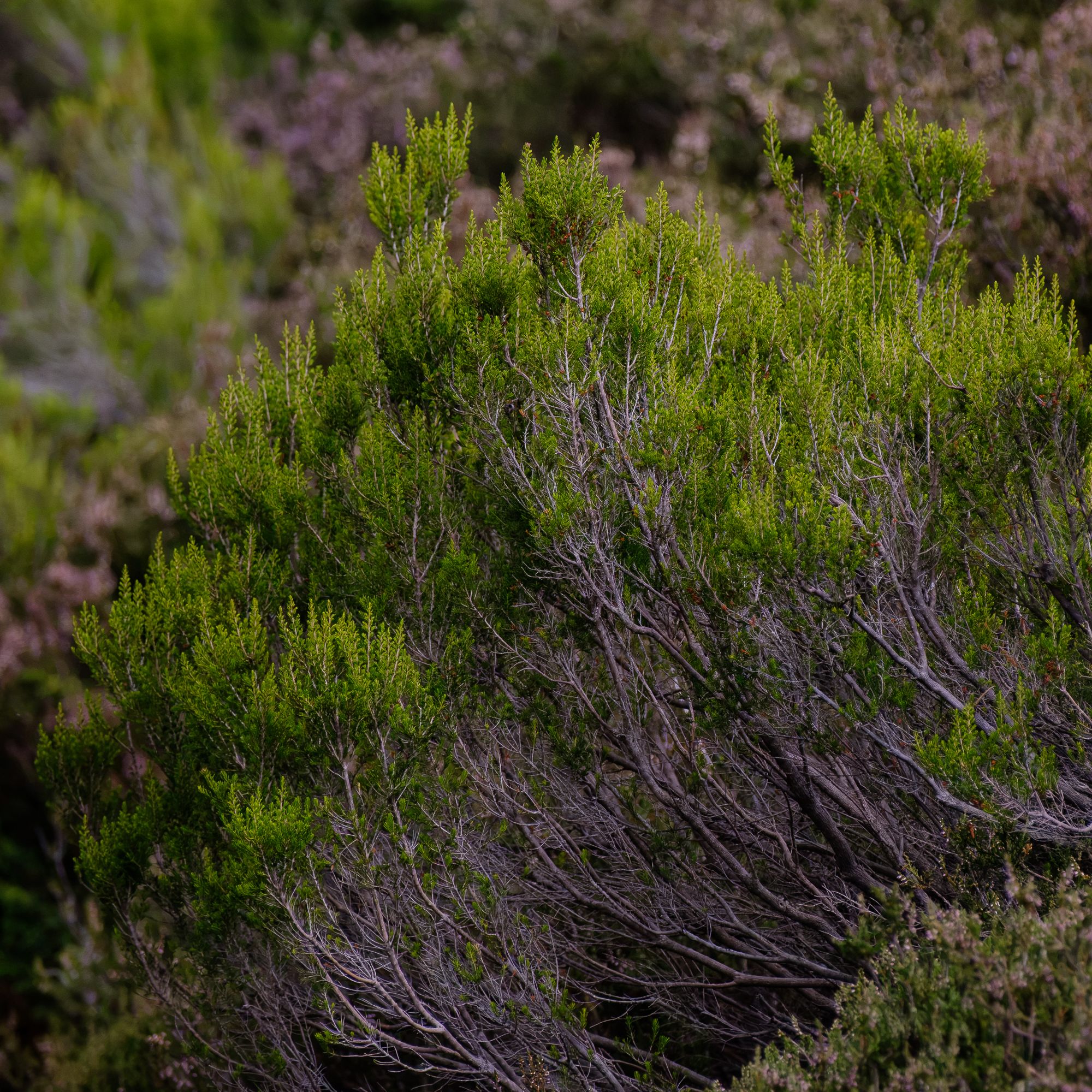
A dark-green spray of tree heather with purple-brown stems.
Heather dots the slopes between oaks and scree.
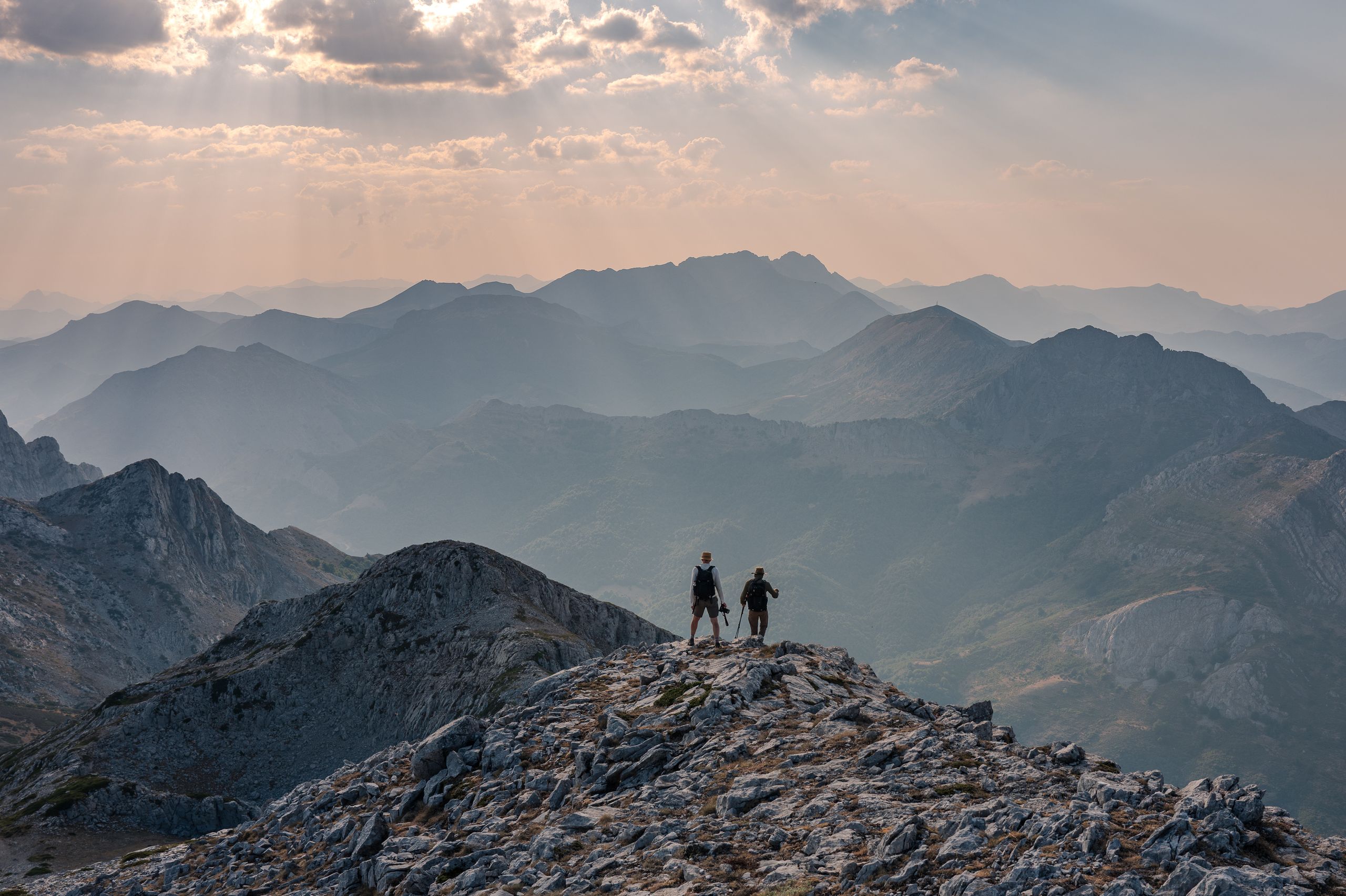
Two figures stand atop a rocky limestone slope. Sunlight streams through the clouds above them as the eclipse begins.
My father and I stand near the top of Pico Yordas, searching for a viewing spot. Photo: Chancy Sprinkle.

We sat, donning glasses and filters, and shook fists at the wispy clouds that cob-webbed the troposphere. And slowly, the light bent off-colour and drained away; the Sun dwindled to a crescent; the horizon lit round with colours as when the sky is scorched with the tired ash of distant forests.
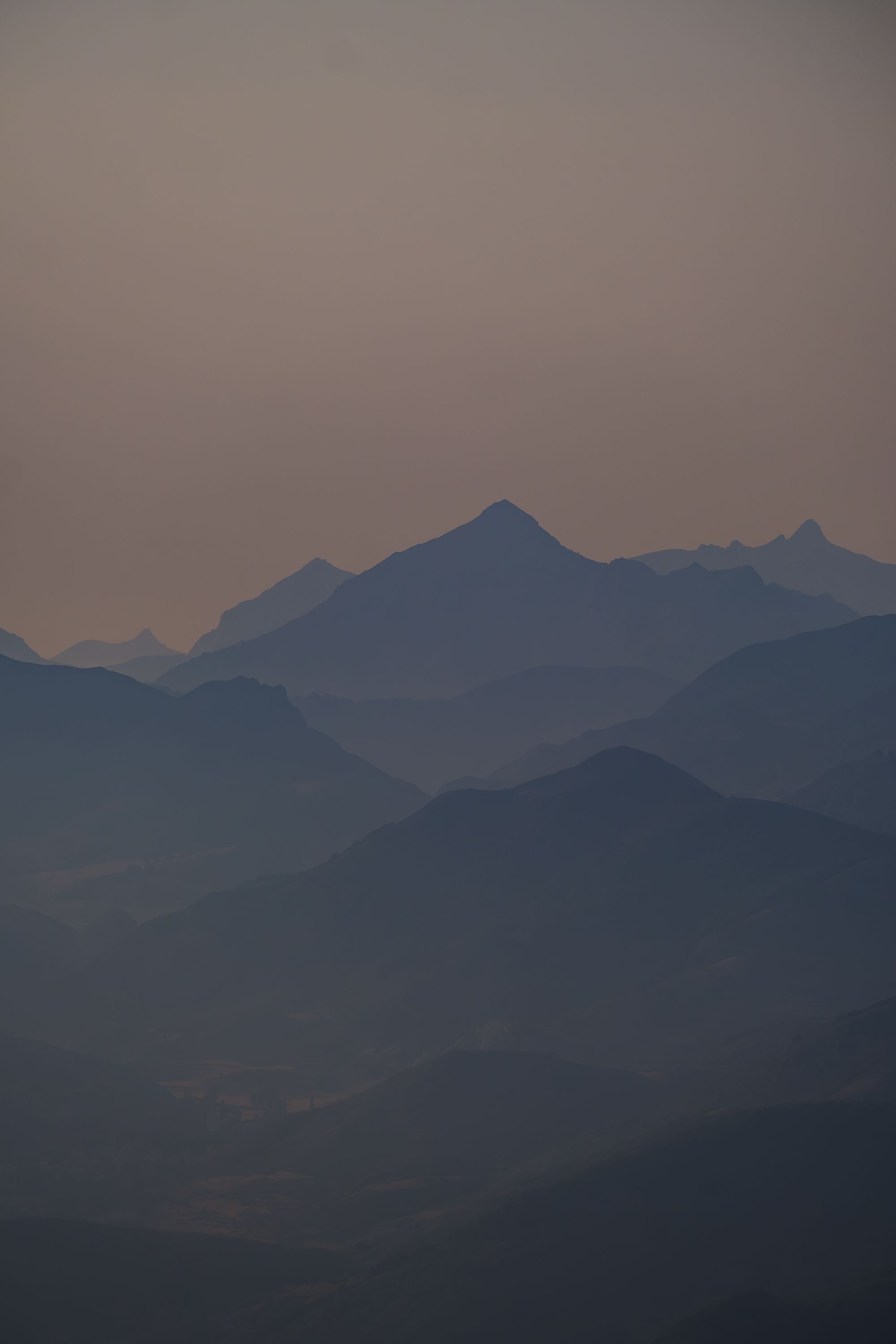
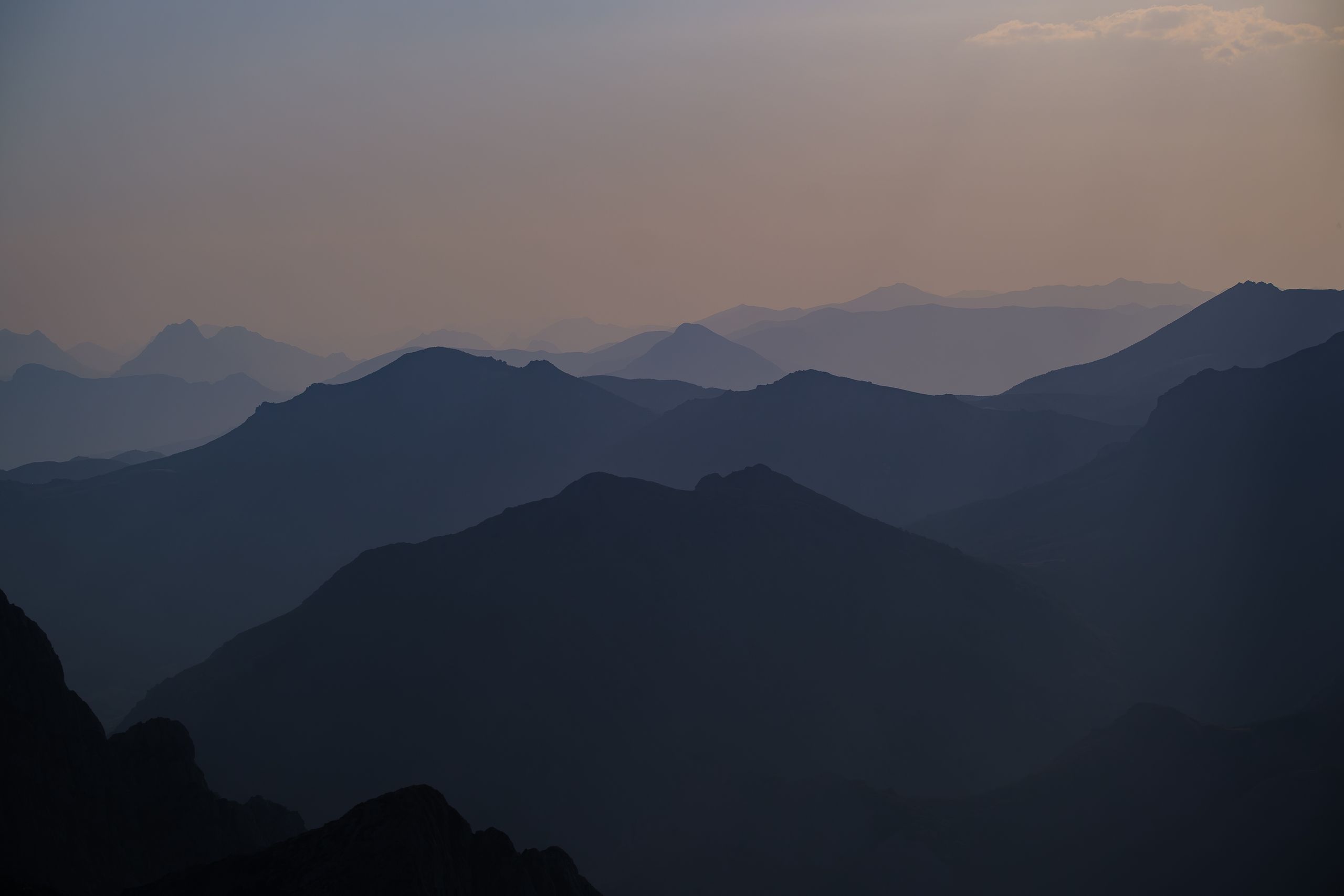
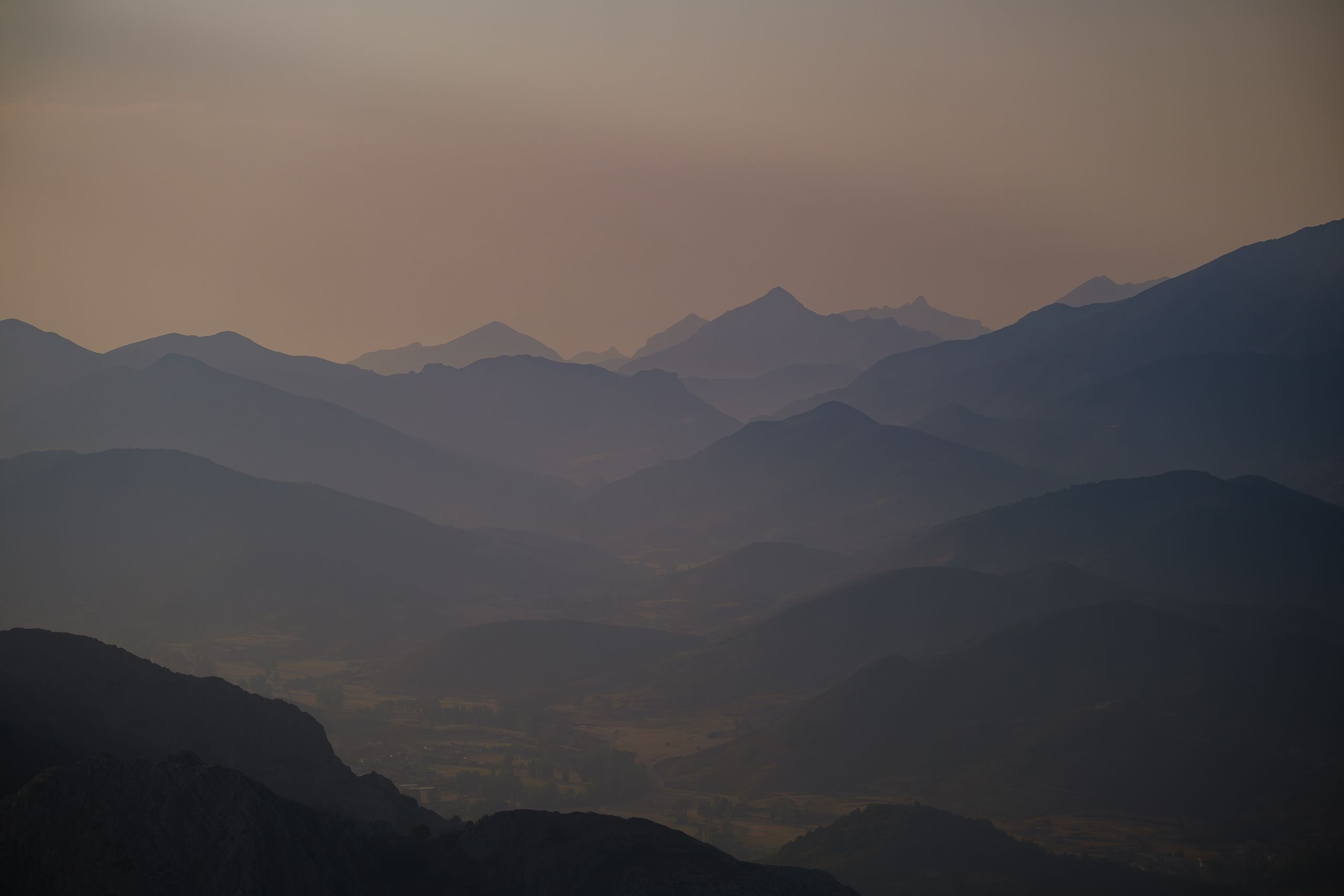
Ridges of the Cordillera Cantábrica lie hazy in the shadow of the Moon.

We talked, pointed, marvelled at the terrain around us, until the last beads of the Sun glinted around the cratered arc of the Moon.
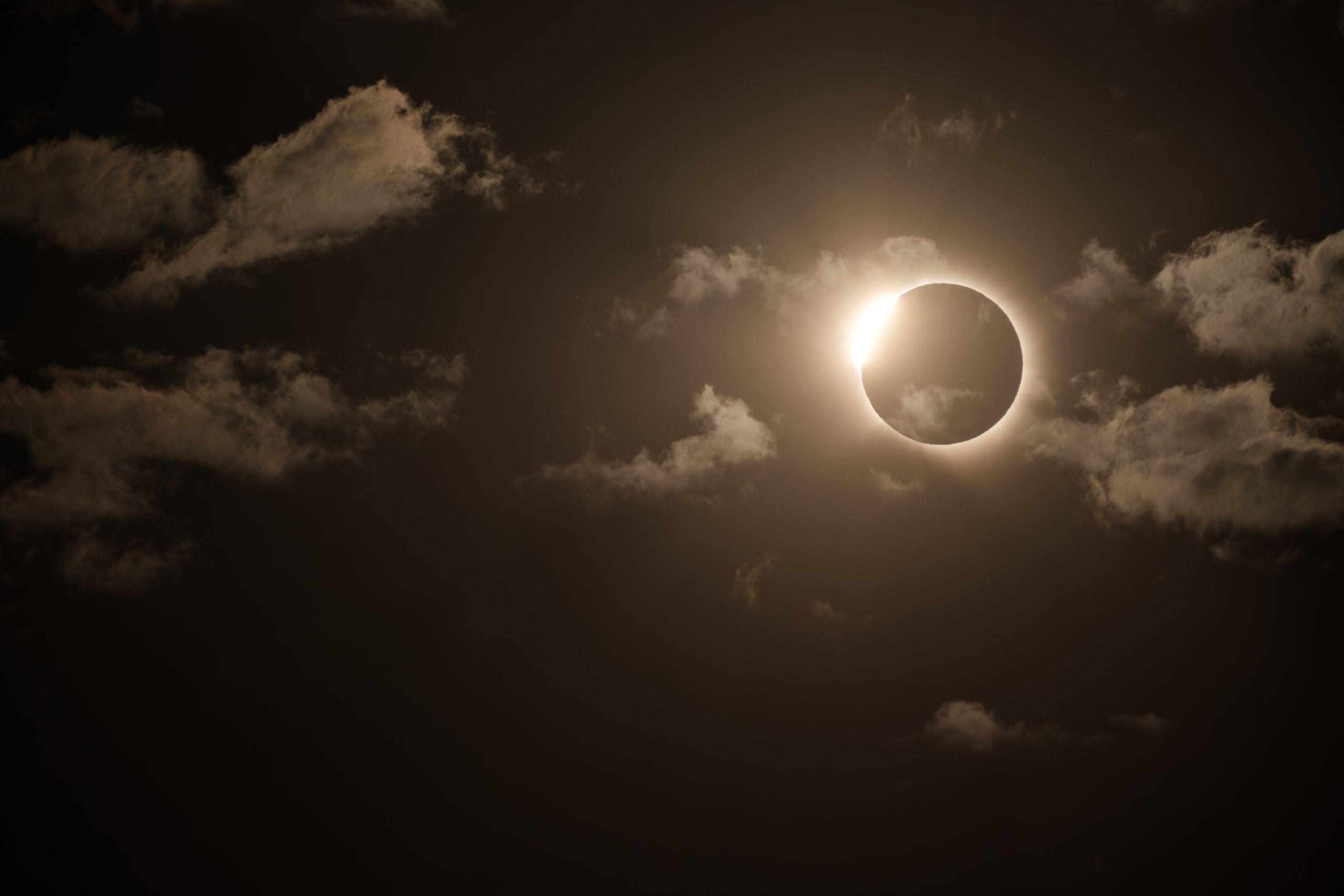
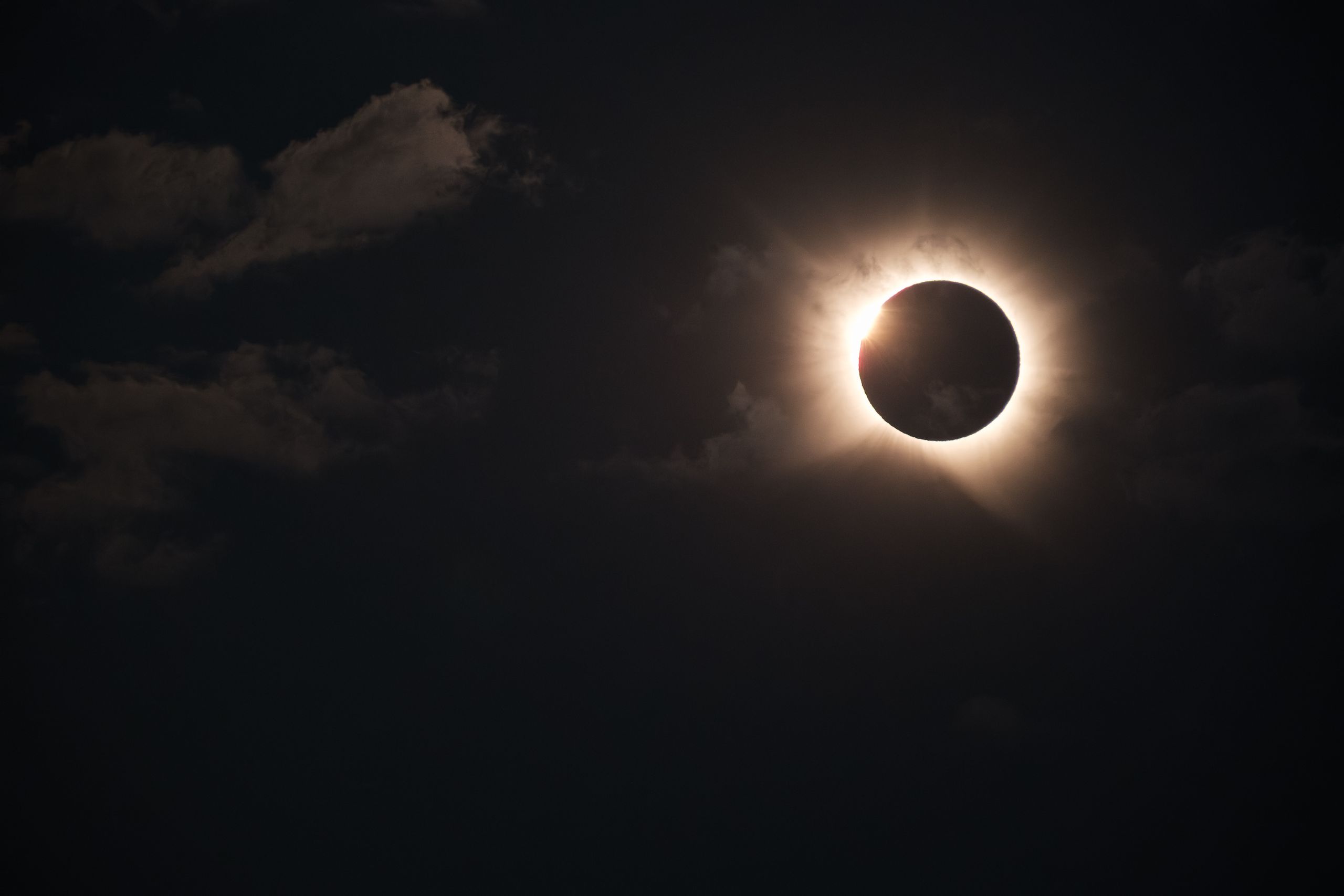
The Sun, moments before totality, is a bright ring around the Moon with a single bright bead at 10 o'clock where the latter does not fully obscure it. Thin clouds surround the scene.
That last bead.
With the Sun almost completely covered, the deep blue of the sky comes through alongside the eclipse. One bright bead remains, but dimmer, and the corona is faintly visible radiating out from the Sun.
The solar filter comes off the lens.

When the light was gone, we all whispered, we and eight others who’d wound their way up the ridge. One hundred and eight seconds ticked by, punctuated by low sounds of awe and the mechanical click of the shutter: cathedral-solemn without incense or pageant.
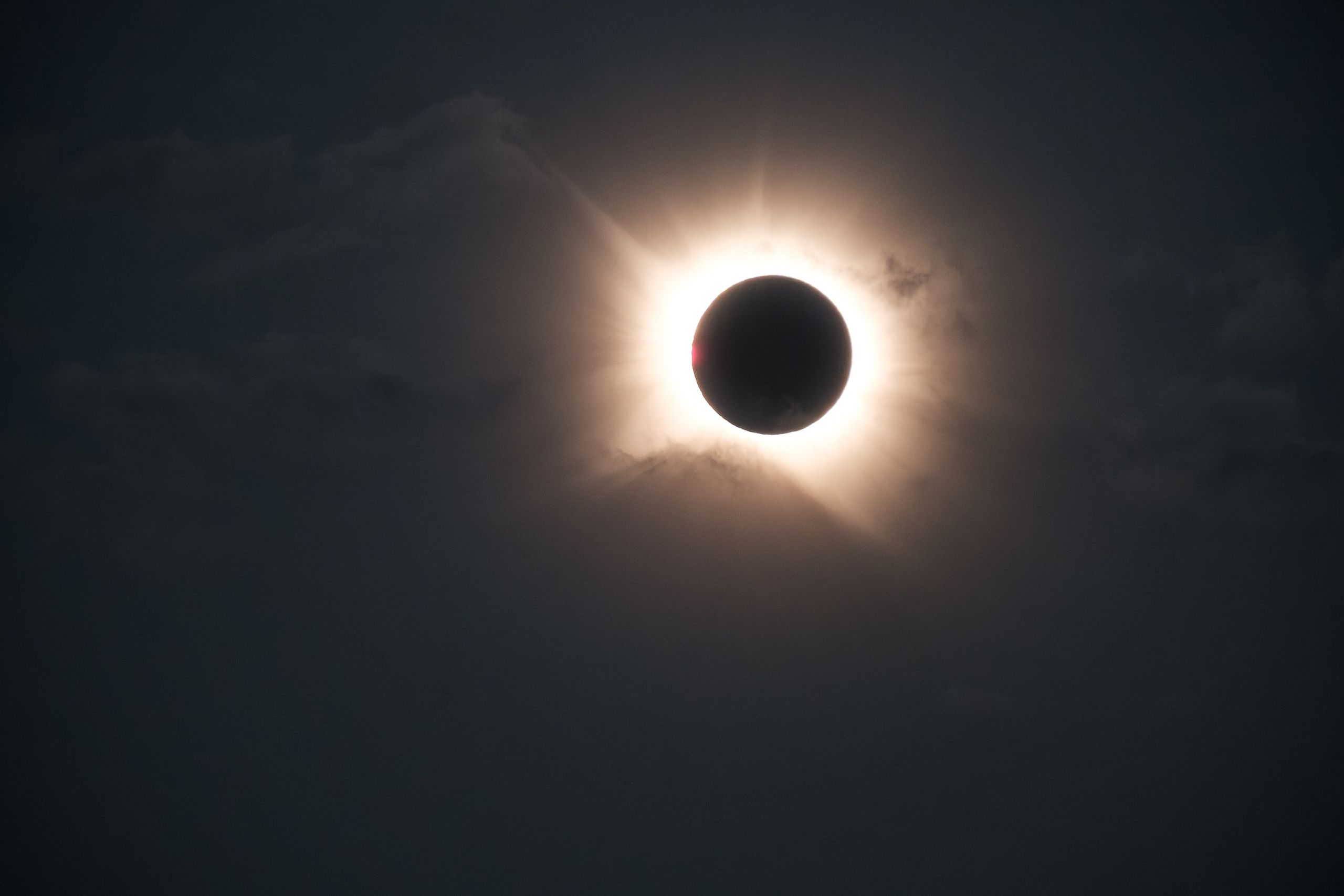
Totality. The corona streams out from the occluded Sun in all directions, pale gold in colour. A few clouds drift in front. A single solar prominence protrudes at 9 o'clock with a faint magenta tint.
Totality as we experienced it...
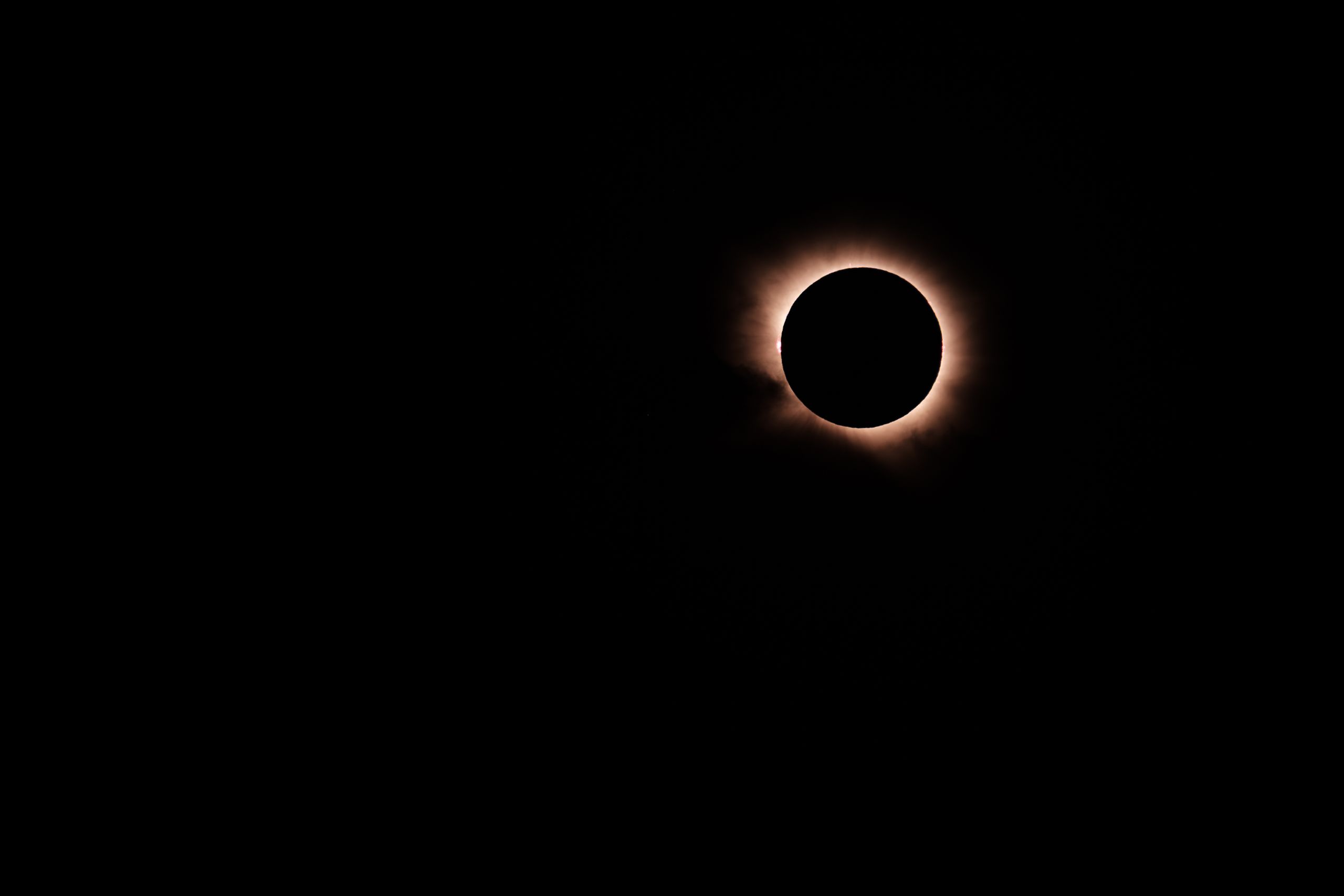
Totality. The corona appears only as a thin ring around the black disc of the Moon. Prominences arc brightly out at 9 o'clock, 12 o'clock and 3 o'clock.
...and the corona in detail.

And we sat, just so, until another bright bead stabbed past the dark edge of the Moon and painted the stubborn clouds gold.
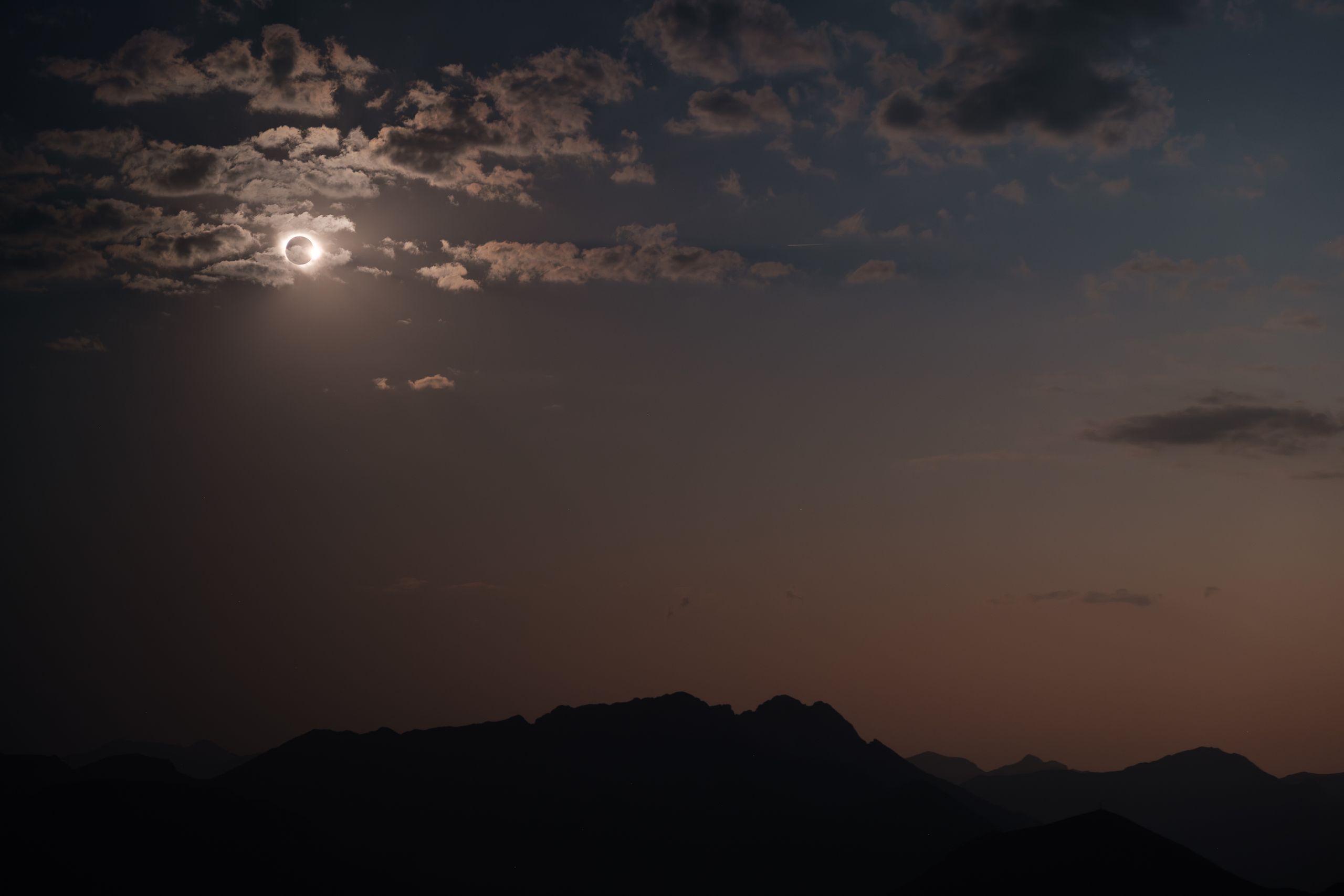
The landscape at the end of totality. The Sun is just re-emerging from behind the Moon, with another bright dot at 3 o'clock. The sky still looks like sunset above the mountains.
The end of totality. Jupiter and Mercury are strung out at lower right of the Sun.

Oh, and befuddled our company: intrigued by the false twilight, a herd of ibex traipsed up over the ridge, eyeing us with suspicion as the sky incongruously began to brighten again.
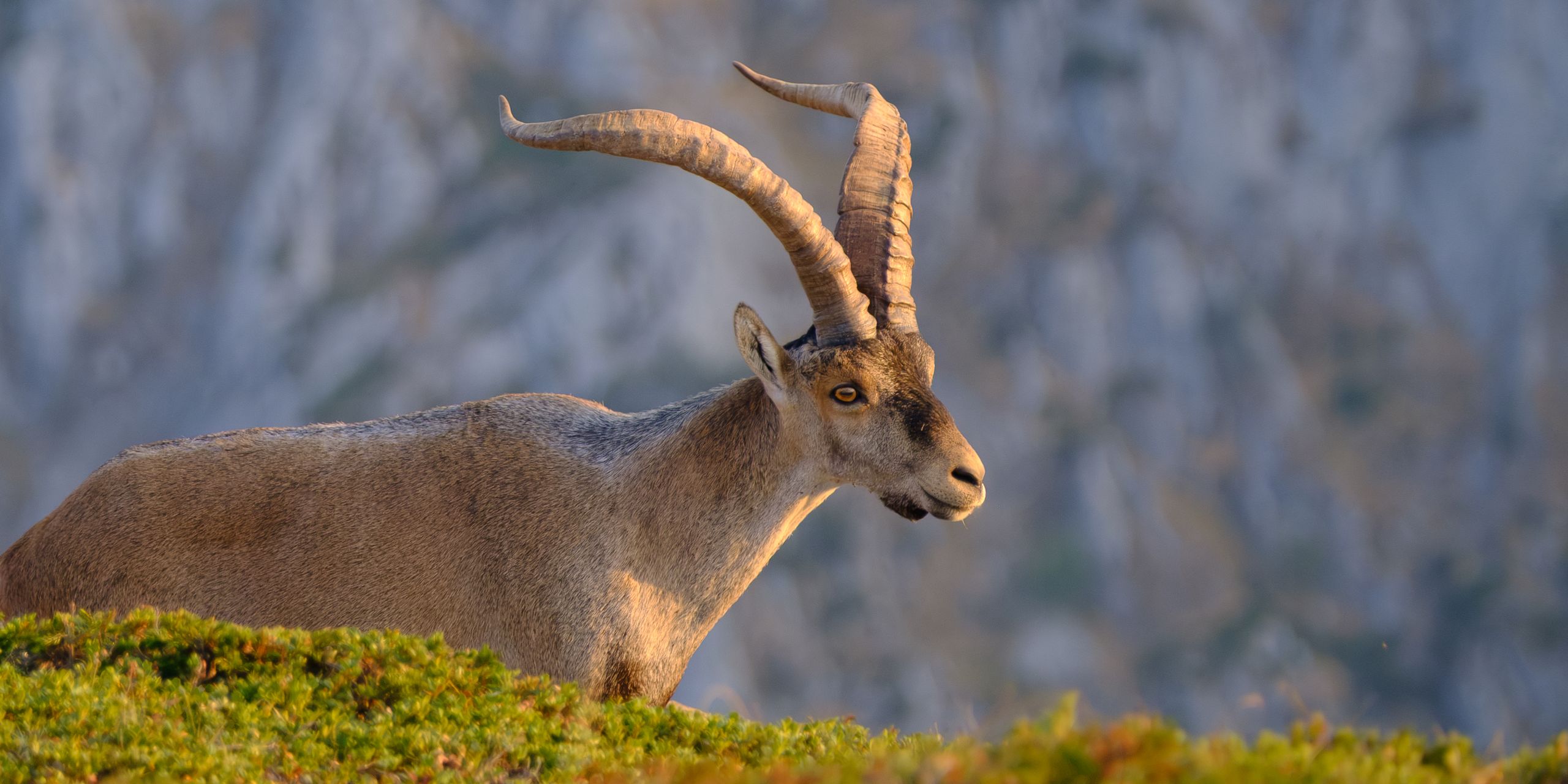
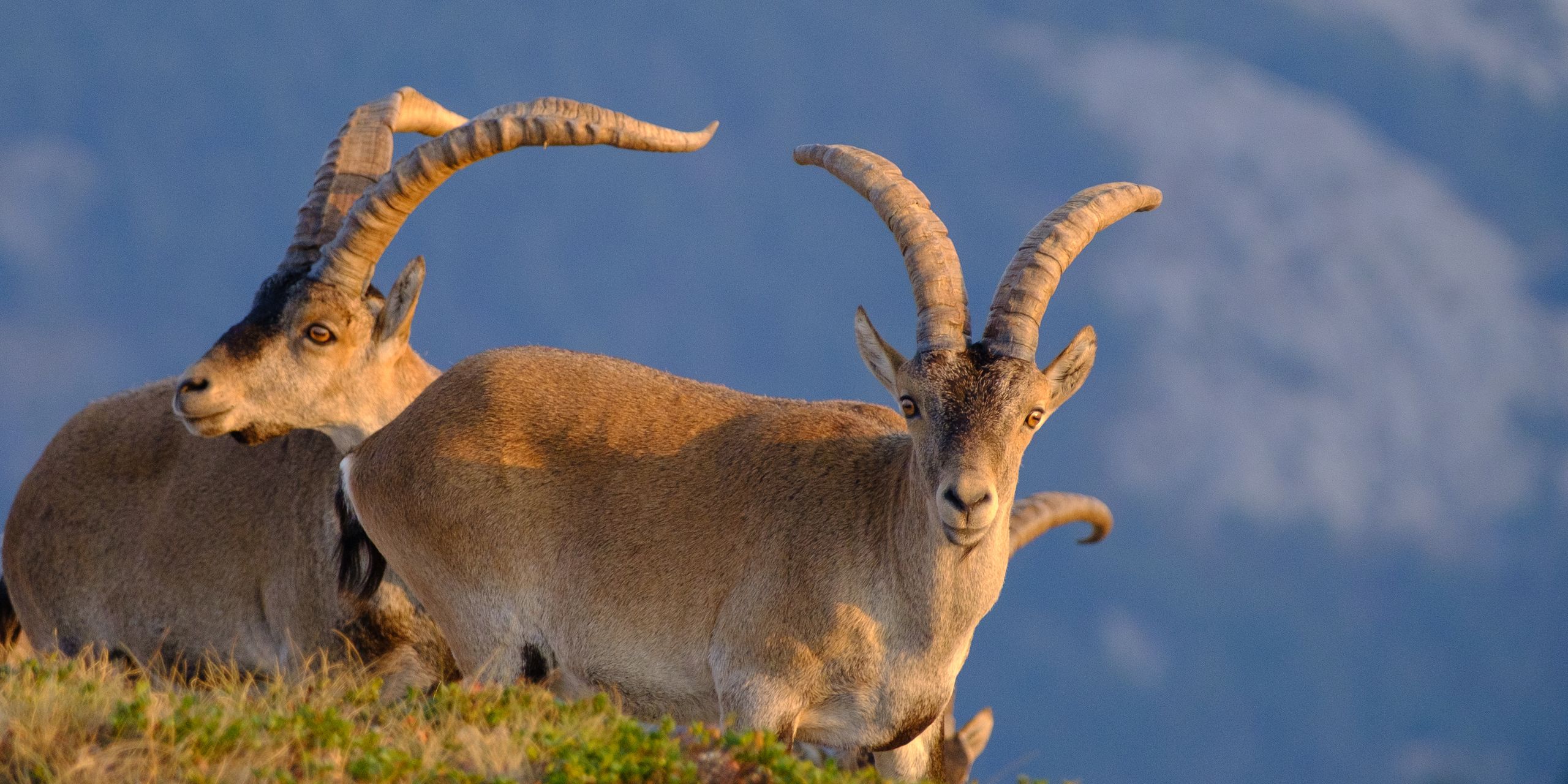
An adult ibex stands in profile on a grassy slope. Its eye is wide open and gold, its fur a gently variegated taupe. Two ridged, twisting horns curve back from its head to about shoulder length.
Who's that tramping over my bridge?

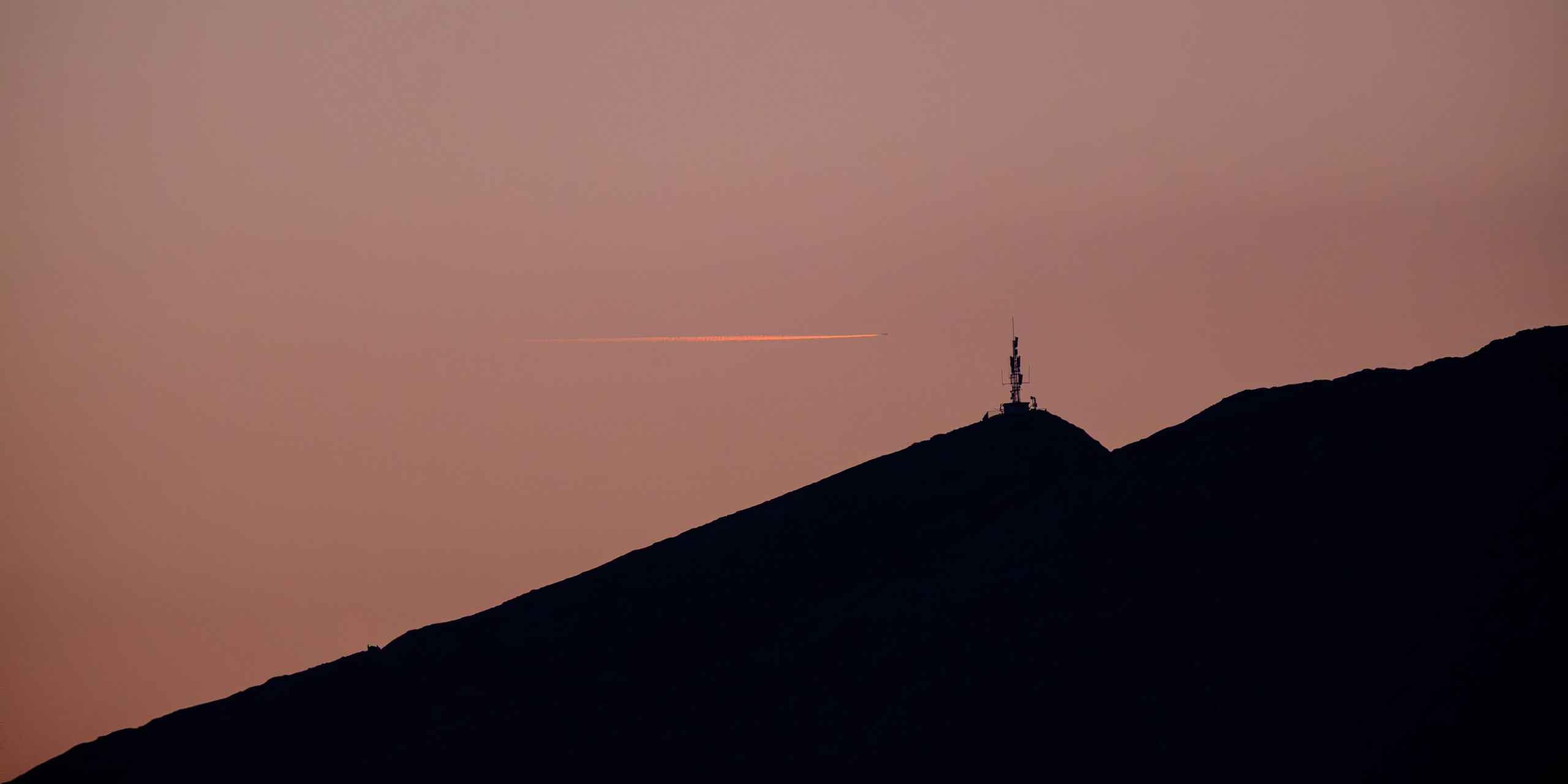
Then, as we ourselves descended, it blossomed orange and dusty pink and violet, the Sun keen on one last display.
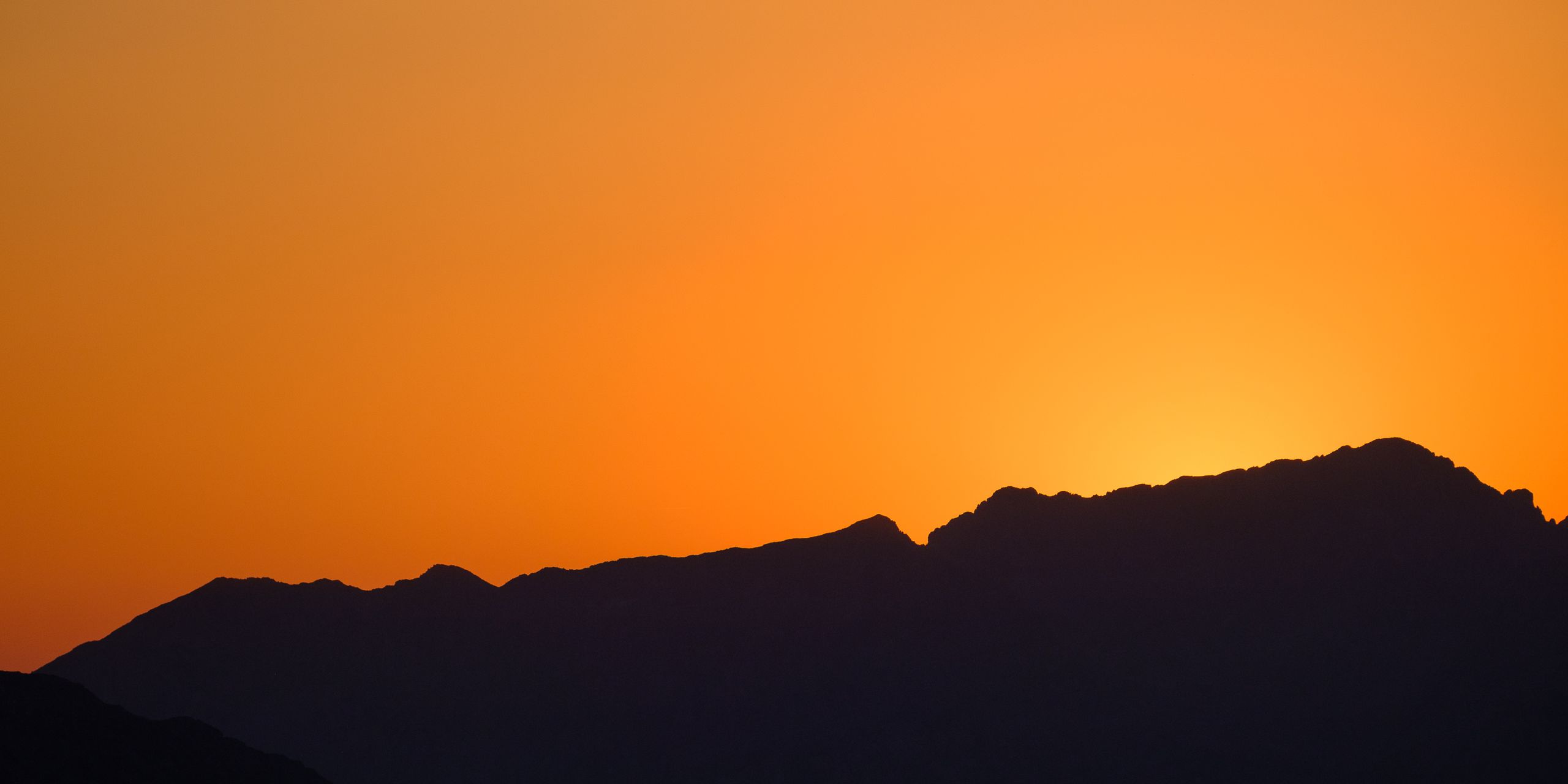
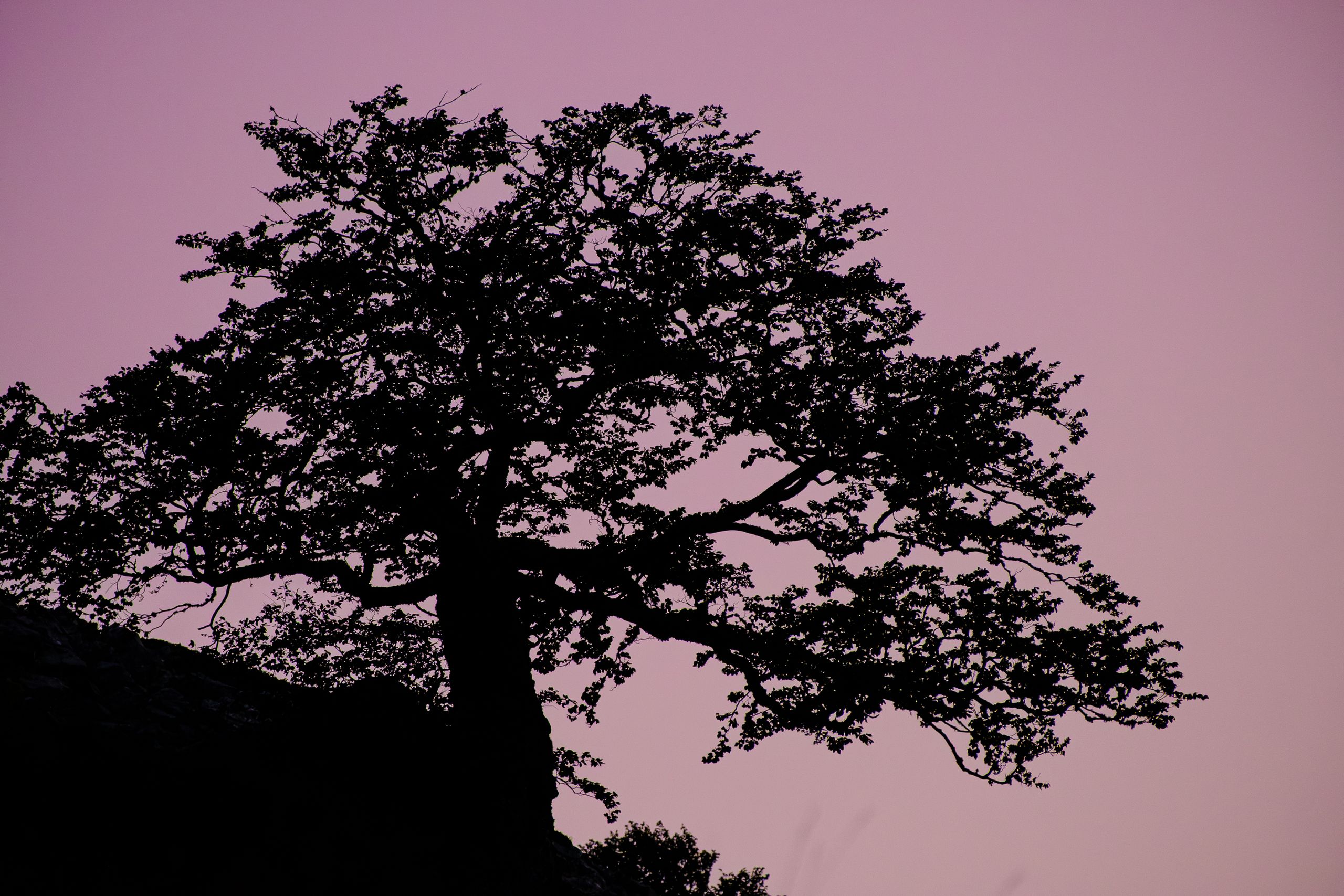
A gnarled oak on the mountainside is silhouetted against the sunset colours, with thick trunk and splayed branches covering most of the frame.
The last total eclipse in this part of Northern Spain was in 1905. Perhaps this tree remembers.